How Liquid Death Turned Water Into a $1.4 Billion Middle Finger to the Industry
Explore how Liquid Death disrupted the beverage industry through rebellious branding, cultural positioning, and performance marketing that transformed water into a billion-dollar phenomenon.
Date
Category
Writer
This Setup was a Dubious Idea that was actually genius
Let's talk about the truth about what Liquid Death is selling. It's water. H2O. The water that falls out of the sky at no cost. It's the thing that your body depends through regardless of whether you drink it in crystal glasses or a puddle on the parking lot. It's true that there's nothing sexually attractive about water.
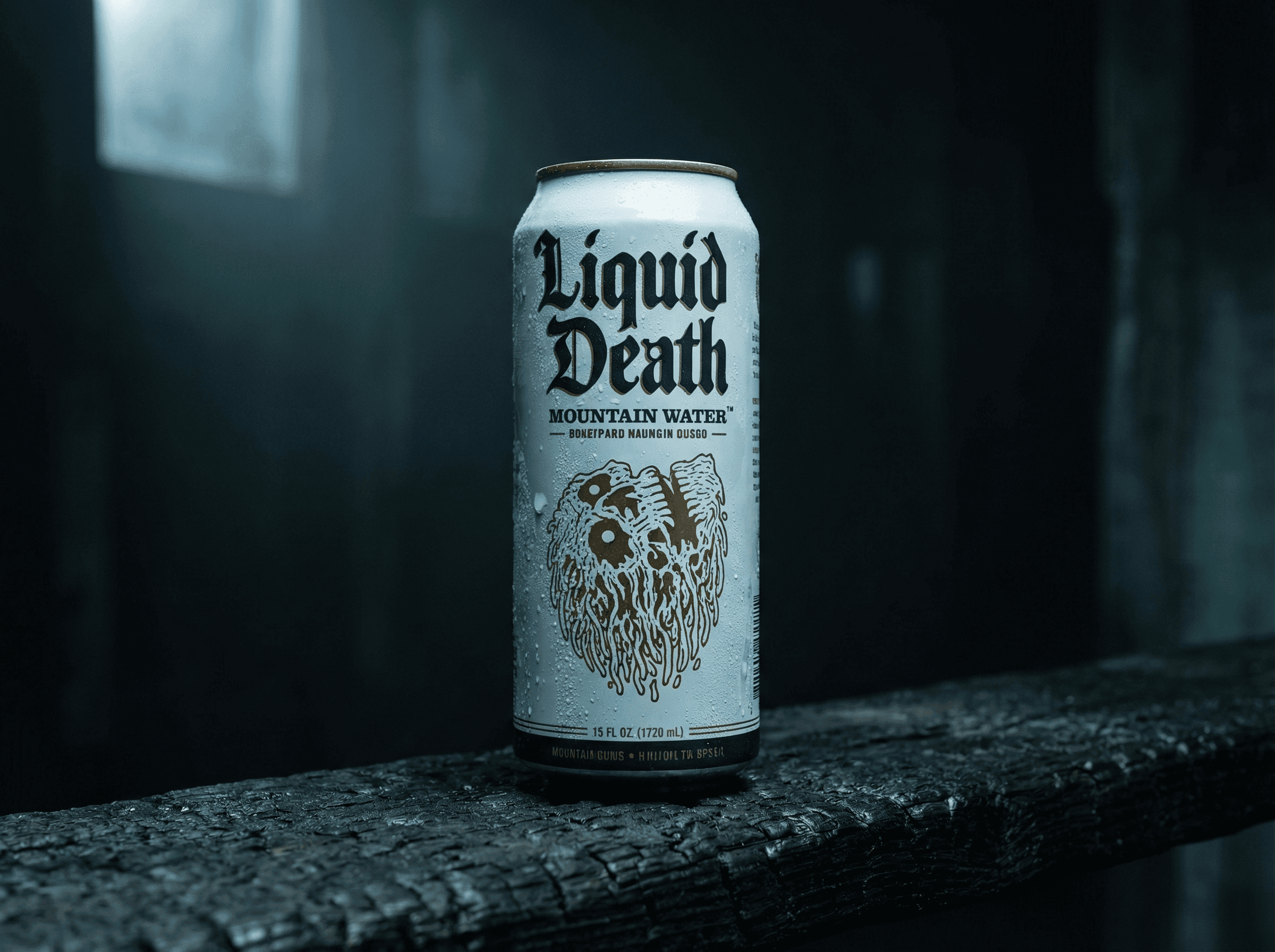
Mike Cessario knew this. An ex- Netflix executive director of creative who sat for years watching the companies put millions into advertisements that nobody could remember, he had one simple, but frightening realization that the product isn't important so much as the narrative you tell around it. The story he picked included death metal. Skulls. Black cans. The slogan "Murder your thirst." Why not?
The idea came to life by Cessario was observing something unusual at an alternative music festival. The performers didn't need energy drinks They wanted water. However, nobody would want to be seen with an "dainty tiny bottle" on the stage. There was a gulf between the drinks was being consumed and the type of drink that people would like to be seen drinking. This gap grew into an industry worth billions of dollars.
The Name: Entertainment First, Hydration Second
Prior to the time that Liquid Death had a single container in production, prior to the time there was manufacturing facilities or supply chain or even a real product There was an advertisement on Facebook. Cessario created a video for $1500, uploaded it to Facebook, and then watched it garner 3 million views over four months. He wasn't trying to sell water. He was evaluating whether people would be willing to buy into a belief.
They did. Yes, they did.
This video confirmed the concept that resulted in the introduction of an Amazon listing in 2019 which then led to Whole Foods in 2020, that led to an increase in sales that can make industry veterans sit down to consider every decision they've ever made. Revenue increased to $3 million by the year 2019 to $45 million by 2021. Then it exploded to $130 million by 2022. It jumped to $263 million by 2023 and $333 million by 2024. An increase of 110x in just five years. For water.
The key wasn't a superior product. The secret was in a more effective performance. Liquid Death hired comedy writers from Adult Swim and kept them far from the marketing and sales teams, because nothing shatters a funny idea more quickly than asking "but is this going to work?" Their content was truly enjoyable. Not "brand-entertaining," where a company does a mildly self-aware tweet and everyone claps. It's actually entertaining. The kind of people who forward their friends at 2 am.
The campaigns: unhinged but Never Foolish
The majority of companies would choose to play it safe. You've got a hot product, you've got momentum, so don't blow it. Liquid Death's reaction to the suggestion was to launch an skateboard deck that was that was infused with Tony Hawk's real blood. Limited edition. Sold out.
They recorded a record on vinyl of hateful comments that people posted through their Facebook and Twitter. They also launched "Kegs For Pregs," an ice-cold keg that is targeted to women who are pregnant. They launched an Super Bowl campaign where, instead of purchasing a TV slot the company auctioned off ads space on 500 cases that they sold. The winner of the auction received their logo printed on the Liquid Death case that shipped to more than 133,000 stores around the world. The campaign received more press coverage than real Super Bowl ads.
There was also The Depend collab. Yes, it's the adult diaper manufacturer. Together, they created the "Pit Diaper,"" a mosh-pit leather diaper designed for those who drink heavily during concerts and cannot get off the floor. The internet was briefly shattered. The e.l.f. Cosmetics "Corpse Paint" heavy makeup collection made of metal was sold out within 45 minutes. None of these collaborations makes logical sense. Each makes perfect sense as brands, since each of them reinforces the same concept: Liquid Death is not an water company. It's an entertainment business that sells water.
Every campaign has passed the internal test: can people like this? It's not what they want. Don't comment on it. Do share it. If someone likes your blog, it's performing your marketing for you, and building their social authority on the matter. This is a lot more important than a paid-for impression.
How to Plan: Brands Do wrong and Liquid Death got Right
Here's a part that many brand breakdowns aren't covered because they're uncomfortable: Liquid Death did not achieve success because they were edgy. The brands that are edgy don't succeed all the often. They did well because their brand's edginess served as a vehicle for something genuine, an honest viewpoint on the person they were targeting and what they were getting tired of.
Their target audience, mainly Gen Z and Millennials who represent more than the 80 percent of their customer base, had been being surrounded by advertising. They could detect a deliberate brand's move across the internet. The thing they reacted to was not the skulls but the commitment. Liquid Death never broke character. The packaging, the website as well as the customer service and social media and the merchandise, all of it was in all in the same way. This consistency is what the majority of brands are unable to achieve.
They also realized that being environmentally conscious didn't necessarily mean boring. "Death To Plastic" was placed alongside skull images without any awkwardness, since the brand had already demonstrated that they wouldn't consider anything to be too serious and that included their own. This self-awareness is rare and precious, and is difficult to produce when people realize the fake.
The numbers back this up. More than 133,000 retail stores worldwide. 14 million total followers in total on Instagram along with TikTok. Amazon's most popular still water. A $1.4 billion value. And they pulled this off without using a traditional marketing agency. They built the entire business in-house and keeping the brand's voice clear and undiluted.
The takeaway: Restraint Is Dead, Long Live Engagement
The lesson learned from Liquid The Death of Liquid isn't "be crazy and you'll win." Many weird brands fade in quiet silence each year. It's a lesson that people don't appreciate brands that are safe, and certainly won't be rewarded by brands who try to be innovative without agreeing to it. Half-ducks are the most dangerous decision you could make.
Liquid Death chose a lane which was loud, raunchy darkly funny, bizarrely eco-conscious, and drove with a blazing speed without ever looking back. They made entertainment their primary product and the water joined in the fun. They treated their audiences as people with an appreciation for taste and humor, not as the targets that were to be optimized towards buying.
What's really puzzling is that the product hasn't changed at all. It's just water in a bottle. The business hasn't changed. The competition was never gone. The only thing that changed is the narrative and the narrative was so compelling and steady, and so entertaining that people preferred the brand over those with five times as much budget.
In a crowded market with brands begging for attention Liquid Death just showed up and took everyone's eyes and declared: Murder your thirst.
It turns out that it was plenty.
At Letsduck We believe that the companies worth working with are those that are who are willing to take a risk on something. If you're playing safe, you know what happens next.
Let's design something that deserves being shared.
Hey@letsduck.com
Latest Articles.
© Kanso Studio
Thoughts, ideas, and perspectives on design, simplicity, and creative process.